


The cost of studying in Canada is generally lower compared to major cities like London or New York. But how much money do you actually need to study in Canada? To give you a clear overview, we present the Canada Study Abroad Cost Guide 2023-2024, detailing all the expenses you should prepare for before starting your studies in Canada. This includes tuition fees, which for international undergraduate students typically range from around CAD 20,000 to over CAD 40,000 per year, depending on the program and university, as well as living costs averaging about CAD 20,635 annually. Additional expenses such as housing, food, transportation, health insurance, and study materials are also covered to help you plan your budget effectively.

Cost of studying in Canada for Vietnamese students
There are 9 main types of costs for studying abroad in Canada that you need to pay attention to, including:
1. Tuition fees to study in Canada
2. Student visa fee & fingerprinting
3. Health examination fee
4. Fee for applying for criminal records
5. Guardianship fee
6. Average admission application fee
7. Translation fee
8. Housing costs in Canada
9. Cost of living in Canada
Specifically, items 1 to 7 are expenses you need to pay before leaving to study in Canada.
1. Tuition fees to study in Canada
One of the main costs when studying in Canada is tuition, depending on the city, program of study, and school you choose. To ensure your studies in Canada, you must budget an amount of 10,000 – 50,000 CAD/year to cover tuition fees. Some majors may have cheaper tuition fees, such as Humanities, Education, and Arts, while Doctors and Engineers often have high tuition fees.
Below are the tuition fees for studying abroad in Canada 2023 – 2024, divided by level and duration for your easy reference.
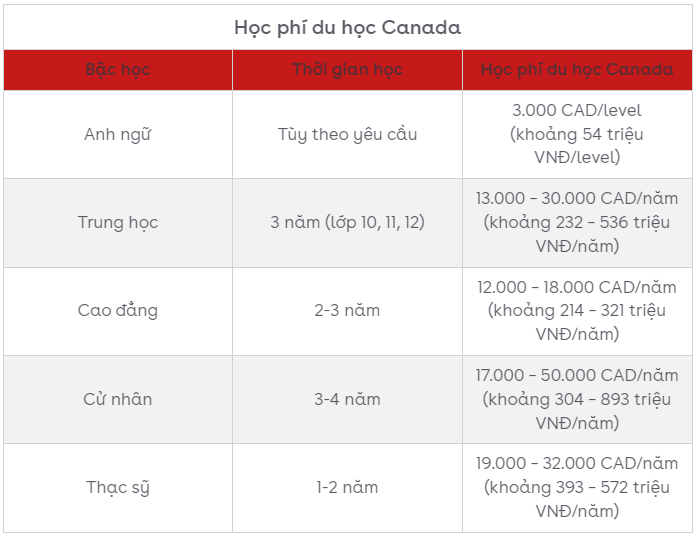
(According to the exchange rate of 17,860.91 VND/CAD from Vietcombank on November 21, 2023)
Exchange rates may change at any time
2. Canadian student visa fee and fingerprinting
In addition to paying tuition, you must pay the Canadian student visa application fee and fingerprinting, a total of $235 CAD (about 4.2 million VND – VCB exchange rate April 12, 2023). Fingerprinting is a mandatory requirement if you want to study and work in Canada, applicable from October 31, 2018, and valid for 10 years.
3. Health examination fee
Health Examination fee when studying in Canada is $126 USD in Ho Chi Minh City (about 2.9 million VND – VCB exchange rate April 12, 2023) for adults 11 years and older and $147 USD (about 3.4 million VND) in Canada. Hanoi.
4. Fee for making criminal records
This is a type of document issued by the Department of Justice or the National Center for Criminal Records, to provide basic information about an individual, proving whether or not that person has a criminal record, and whether the background is clean. or not… If they want to study in Canada, Vietnamese students are required to have this type of document, and the cost of making a criminal record is 200,000 VND.
In addition, not only a criminal record, you can learn more about what a Canadian study abroad application requires to best prepare for your study abroad journey!
5. Guardianship fee
Most high schools in Canada will require international students to have a guardian when applying for admission to the school. The average cost of guardianship is 200 – 1,000 CAD (about 3.5 – 17.9 million VND)
6. Average admission application fee
When applying for admission to a Canadian school, you must pay an admission application fee. Depending on the school you choose, this fee will vary; on average, it is 100 CAD (about 1.79 million VND)
7. Translation fee
The fee for translating documents to study abroad in Canada is about 800,000 VND/set.
8. Housing costs in Canada
One of the most concerning issues when studying in Canada – after tuition, is “where will I stay and what will it cost?”. There are three options for accommodation for international students in Canada.
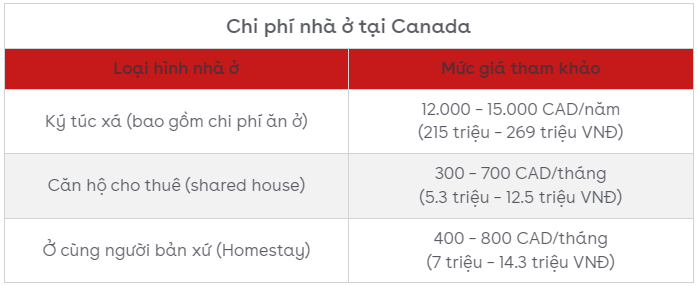
During your first year, you can choose to stay in the dormitories of your school of study. With a dorm room, you will usually stay with another friend and share the kitchen and amenities with other students in the same building.

The second accommodation option when studying in Canada is off-campus rental apartments. This option seems more comfortable when you have your own bedroom, but still have to share other spaces in the apartment with your roommate. In addition, you also have to pay other living expenses such as electricity, water, internet, etc. The cost of renting a room will vary widely, depending on the real estate price of the area where you study abroad.
Finally, you can choose the option of living with a Canadian family in the form of a homestay. Initially, you will have to pay a small fee for the house-finding service. While staying in this homestay, you will participate in activities with your family and learn more about the local culture.
9. Cost of living in Canada
When studying in Canada, you will need some expenses for purchasing goods, necessities, extracurricular activities, and in emergency situations. Better yet, keep track of your monthly expenses so you don’t overspend.
Below are some costs for your reference:
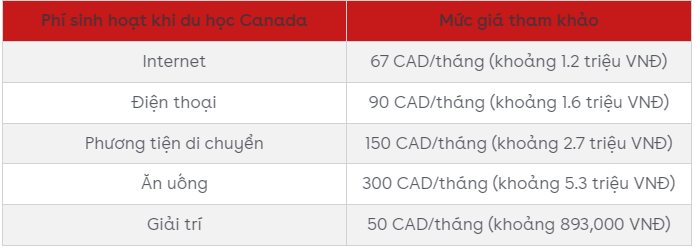
Experience shows that expenses such as health, entertainment, shopping… will also cost you quite a bit. Try to save and have a reasonable spending plan; this will help you be financially proactive while studying in Canada.